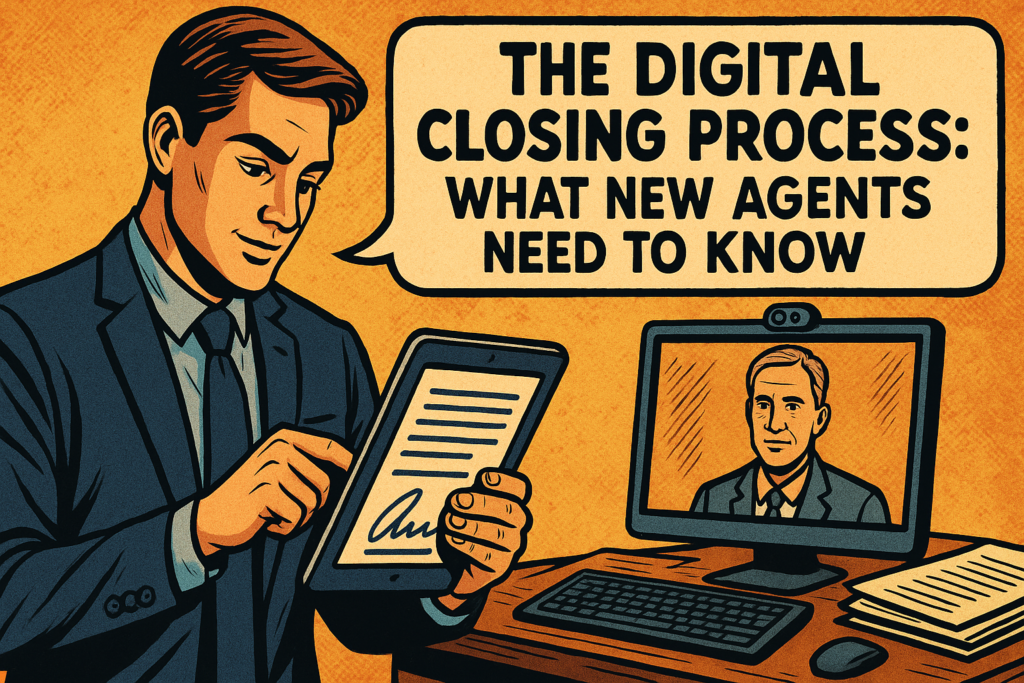
In the past few years, real estate transactions have undergone a quiet revolution. Paper stacks, in-person signings, and endless courier trips are giving way to a more efficient, secure, and client-friendly approach: the digital closing process. For new agents, understanding how electronic and remote closings work isn’t just a convenience—it’s a professional advantage.
This guide breaks down what every ambitious newcomer should know about today’s technology-driven closings, how to prepare clients for a seamless experience, and how to address the most common questions about legality and security.
What Is the Digital Closing Process?
A digital closing (also called electronic closing or eClosing) is a real estate closing where some or all documents are signed electronically. Depending on the transaction type and local laws, there are a few variations:
- Hybrid eClosing: Some documents are signed in person, while others are completed electronically.
- Fully Remote Online Notarization (RON): The entire closing happens online, with all signatures and notarizations completed via secure video conferencing.
In Florida, both hybrid and RON closings are legally recognized. That means clients in Ocala, Marion County, or across the state can close on a home without ever setting foot in an office—a huge convenience for relocating buyers or investors.
Why Digital Closings Matter for New Agents
As a new real estate professional, your ability to navigate modern closing technologies instantly sets you apart. Buyers today expect flexibility, transparency, and speed. Digital closings deliver all three:
- Speed: Electronic signatures cut turnaround times from days to hours.
- Convenience: Clients can review and sign documents from their own devices.
- Accuracy: Built-in checks reduce missed signatures or errors.
- Transparency: Everyone in the transaction can track progress in real time.
When you understand the digital closing process, you position yourself as a modern, tech-savvy agent who helps clients move from contract to close with less stress.
The Technology Behind a Seamless eClosing
Digital closings rely on several integrated technologies:
- eSignature Platforms like DocuSign or Notarize handle document execution.
- Secure Portals from your title partner (like True Title of Central Florida) store and share sensitive data safely.
- Remote Online Notarization (RON) Software allows notaries and clients to connect via webcam for legally binding e-notarizations.
- Two-Factor Authentication & Encryption ensure all parties are verified and that client data remains private.
While you don’t need to be an IT expert, you should know the basics. Ask your title company which tools they use and familiarize yourself with how clients log in, verify identity, and access documents.
How to Prepare Clients for a Digital Closing
For many clients—especially first-time buyers—a digital closing might sound intimidating. Here’s how to prepare them confidently:
- Set expectations early. Explain what will happen, including how electronic signatures and online notarization work.
- Confirm device readiness. Encourage clients to use a computer or tablet with a strong internet connection. Smartphones can work but may be less ideal for reviewing documents.
- Explain ID verification. Clients will need a valid photo ID and may be asked to complete a short identity check before signing.
- Review documents beforehand. Share the digital packet early so clients can ask questions in advance.
- Reassure them about security. Many clients worry about fraud. Explain that platforms use bank-grade encryption and video verification for each signer—often making digital closings safer than paper ones.
By preparing your clients well, you eliminate the anxiety that can accompany new technology and build trust that lasts beyond the transaction.
Addressing Common Concerns: Legality and Security
Is it legal?
Yes. Florida has recognized electronic signatures for years, and remote notarization became fully legal in 2020 under the Florida RON law. Electronic closing documents carry the same legal weight as paper originals.
Is it secure?
Absolutely. Digital closing systems use multiple layers of protection:
- Encryption protects documents in transit and storage.
- Multi-factor authentication verifies each signer’s identity.
- Audit trails record every action—from when documents are opened to when they are signed.
Partnering with a trusted title company that prioritizes wire fraud prevention and data security is essential. True Title of Central Florida, for example, employs strict verification protocols to protect both agents and clients from cyber threats.
How Digital Closings Strengthen Your Brand as a New Agent
Technology alone doesn’t close deals—relationships do. But understanding the digital closing process helps you do both:
- You save clients time and stress. Convenience is now part of good customer service.
- You project professionalism and confidence. Guiding clients through a smooth eClosing shows competence.
- You partner more effectively with your title team. When you understand their systems, communication becomes seamless.
- You attract modern clients. Tech-savvy buyers and out-of-area investors will notice your ability to manage closings efficiently.
In short, mastering digital closings builds credibility and keeps your business ahead of the curve.
Quick Tips for Success in Your First Digital Closing
- Choose the right title partner. Work with a company experienced in eClosings and remote notarization—one that provides clear communication and client education.
- Do a tech check early. Test links, software, and connectivity before your client’s scheduled signing.
- Stay present. Even if the closing is remote, be available by phone or video in case your client has questions.
- Follow up immediately. Confirm receipt of completed documents and congratulate your clients—digital doesn’t mean impersonal.
The Bottom Line
The digital closing process isn’t the future of real estate—it’s the present. For new agents in Central Florida, understanding how eClosings work gives you a major edge in a competitive market. You’ll be able to guide clients confidently, work more efficiently with your title team, and deliver the kind of experience that earns repeat business.
If you’re ready to learn more about how digital closing technology can streamline your next transaction, connect with True Title of Central Florida. As The Problem-Solving Title Experts, we make innovation feel simple—so you can focus on growing your business.
How comfortable are you with digital closings? Share your thoughts below or reach out to our team for a quick walkthrough of the eClosing process—we’ll show you how technology can make your next closing your smoothest yet.